Showing posts with label Paperboard. Show all posts

Wednesday, August 6, 2014

Chromatografting: A New Water Repelling Technology for Corrugated?

packaging consultant expert
By Eric Carlson, CPP 
Chainalytics 

The best and worst feature of paper is its ability to absorb and retain water.  The paper making process is a water-intensive operation that allows us to make paper efficiently and also allows us to recycle paper and corrugated materials.  There are many products we count on every day for their water absorbing properties; in particular for personal hygiene.  However, for those of us involved in the packaging and the supply chain, water and water vapor causes trouble by weakening corrugated and other paper products. 

Corrugated is the most common material used for making shipping boxes and transport packaging and moisture can weaken the strength of the box very quickly and dramatically.  Cranking up the relative humidity to 80% reduces stacking strength by one-third.  If the corrugated gets wet, stacking strength is virtually ZERO.  Liquid water can also cause sufficient cosmetic damage to cause the box to be unsaleable whether the product inside damaged or not.  This is why it is so important to keep your corrugated boxes dry in your supply chain. 

There are coatings for corrugated materials, some better than others.  I have had countless cups of coffee in paper cups, but the reason the cup holds together is because the inside, and sometimes the outside is lined with polyethylene.  The polyethylene coating keeps my coffee cup from becoming a soggy mess in my hand, but makes the cup very UN-friendly to the paper recycling process. 

There have been many efforts in the past to come up with a new way to make the paper water resistant and still work in the repulping operations that converts post-consumer fiber material back into paper.  The most common coatings used today use water-based chemistry to coat an entire side (flood coat) of material (paper or corrugated) using a wet roller and controlling application thickness very closely to assure the product dries fully in the converting process. 

Last year a new kid on the block began touting a new process and some new chemistry to bring water resistance to the paper and corrugated industries.  PackagingDigest indicates that BT3 Technologies are wet coating the web, then controlling the vapor pressure of the fatty acids onto the paper substrate with heat to drive off the excess.  The fatty acids are reportedly from plant based chemistry. Traditional vapor deposition works by laying down molecular layer(s) onto an entire surface.  Similarly, BT3 is coating the entire surface; however, the target of the coating is the hydroxyl group on the paper to which their fatty acid can bond.  They refer to this combination of wetting, heating and chemical bonding as ‘chromatografting’.  This year, Packaging Digest reports that BASF signed an agreement with BT3. 

The below video shows the potential on a paper towel


There has been a lot of buzz in the media lately about coatings that are super water repellent (my new Samsung phone is claiming to be water resistant, but I’m not going to be the one to test it on purpose).  Most of these new water repelling coatings are also based on some type of very thin layer (typically a single molecule thick) of super-hydrophobic material. 


BT3 Technologies will need to scale up their process window (currently at a web of 9.5”), however, their process speed is well within corrugated process windows at ~1300 ft/min.   Additionally, BT3 is creating additional grease and gas barriers by combining their chromatografting with previously treated paper with polyvinyl alcohol (PVOH).  With the addition of BASF chemical engineering muscle, it’s possible this may become a viable and valuable new coating.

Leave a comment where yous see the greatest potential for this technology in Packaging!

Tuesday, July 24, 2012

Corrugated vs. Cardboard

by Rob Kaszubowski, CPP
Chainalytics


Corrugated or cardboard? What’s the difference, you ask? Well, to most people, these two terms mean the exact same thing.  But, in packaging engineering, they are distinctly different. (In fact, most packaging engineers or designers cringe when they hear the word cardboard used in the wrong context!)

Many people use the word "cardboard" to refer to any type of paper packaging substrate. The truth is, most of the time, they should be using "corrugated."

Corrugated material is easy to identify. It is made up of three layers of paper: an inside liner, an outside liner, and fluting which runs in between. The material gets its name from the corrugated medium which helps provide it's strength. The most typical applications of corrugated are in shipping boxes secondary or tertiary packaging, retail displays, pizza delivery boxes and even some retail packaging.

                                      
 Examples of Corrugated Boards

The term cardboard typically refers to a thick paper stock known as paperboard or folding carton material. Typical applications are cereal boxes and other smaller consumer goods packages.


Examples of Cardboard or Paperboard Packaging

So, the next time you want to impress some of your packaging engineer buddies, be sure to tell them how you were impressed with the corrugated candy bar display you saw at a store, or how you recycled the corrugated shipper box you received from Amazon.com.

Tuesday, March 6, 2012

Can Technology Make Our Packaging Smaller?

by Rich Lindgren, CPP - Chainalytics
Recently, there has been a growing amount of mobile barcodes published everywhere people are looking for information. From magazines articles and store shelves to transportation signs, these Mobile Barcodes, which are often referred to as QR (Quick Response) Codes or Electronic Tags, are popping up all over. These barcodes are gaining popularity quickly because they allow print and visual media to connect with digital media easily with an embedded URL that links to a video, website, or any other online media.
Here are a few advantages:
•Call-to-action: Use Mobile Barcodes as a direct response marketing tool for print campaigns; Mobile Barcodes automatically integrate print advertising with mobile devices.
•Manage the customer experience: Use Mobile Barcodes to link to a mobile website or video, on a business card to instantly add someone to your address book, dial a phone number, or display a free message.
•Advanced analytics: Measure campaign effectiveness with enhanced reporting, such as the number of scans of a particular Mobile Barcode over time and by geographic location.
•Adaptable size: Mobile Barcode’s small size allows you to maximize the information delivered to customers without taking up a lot of real estate in your printed materials and packaging.
•Sustainability: Using Mobile Barcodes for product information and marketing collateral eliminates the need for physical handouts and multiple copies. Now customers can scan these Mobile Barcodes and access the information virtually.
Curious how it works? Simply download the FREE applications or “Apps” for QR Codes and Microsoft® Tag from your appropriate App Store or website. Then use the QR Code Reader to scan the black and white barcode on the top or use the Microsoft Tag Reader to scan the multicolored barcode on the bottom.
Here at Chainalytics Packaging Optimization Practice, our packaging engineers are excited about this new technology because it could mean an end to inflated packaging. Many companies often inflate the size of their consumer packaging to create a larger billboard space to attract customers and provide additional product information. As these mobile barcodes become more accepted, consumers will be able to scan these small barcodes off the package, download all the product information instead of reading it on the package. Therefore allowing companies to cut down on their packaging size, save money and have a positive impact on their sustainable footprint, leaving a better planet for everyone!
For fun, here is a link to a video that demonstrates using a smartphone to read an electronic tag in a periodical to access a website and a video on a product.

Tuesday, August 3, 2010

Get Paid to Recycle

by Rob Kaszubowski, CPP - Chainalytics
Wouldn’t you love to get paid to throw stuff away? Well, now you can, thanks to Recyclebank. Recyclebank is a company that tracks and scans the weight of packaging you recycle each week, and then turns your recycled goods into points which you can accumulate to redeem later for anything ranging from magazine subscriptions to coupons to other fun freebies and deals.

Our community recently started using Recyclebank in 2010, and I’ve already cashed in my reward points for deals and coupons at local sporting goods stores, clothing stores and restaurants. We were pretty good at recycling before the program was started, but now we definitely have some additional incentive. Plus the whole neighborhood has really taken to the program, which now seems to make recycling fun and exciting! A recent release stated that 87% of households in my town are participating in the recycling program, up from about only 60% before the program started.

Recyclebank also tracks your personal recycling data to show just how “green” you are by identifying the number of trees and gallons of oil saved, just by recycling your water bottles, newspapers and glass bottles every week!
Recyclebank’s focus on the environment and educating consumers on recycling and packaging has definitely put a new, exciting spin on recycling. I can’t wait to see what kind of rewards my points will get me next!


Can't view the video, click here.

Wednesday, June 23, 2010

Quaker Loses the Box on the Rip n’ Go Chewy Granola Bars

by Brad Oberstadt- Chainalytics
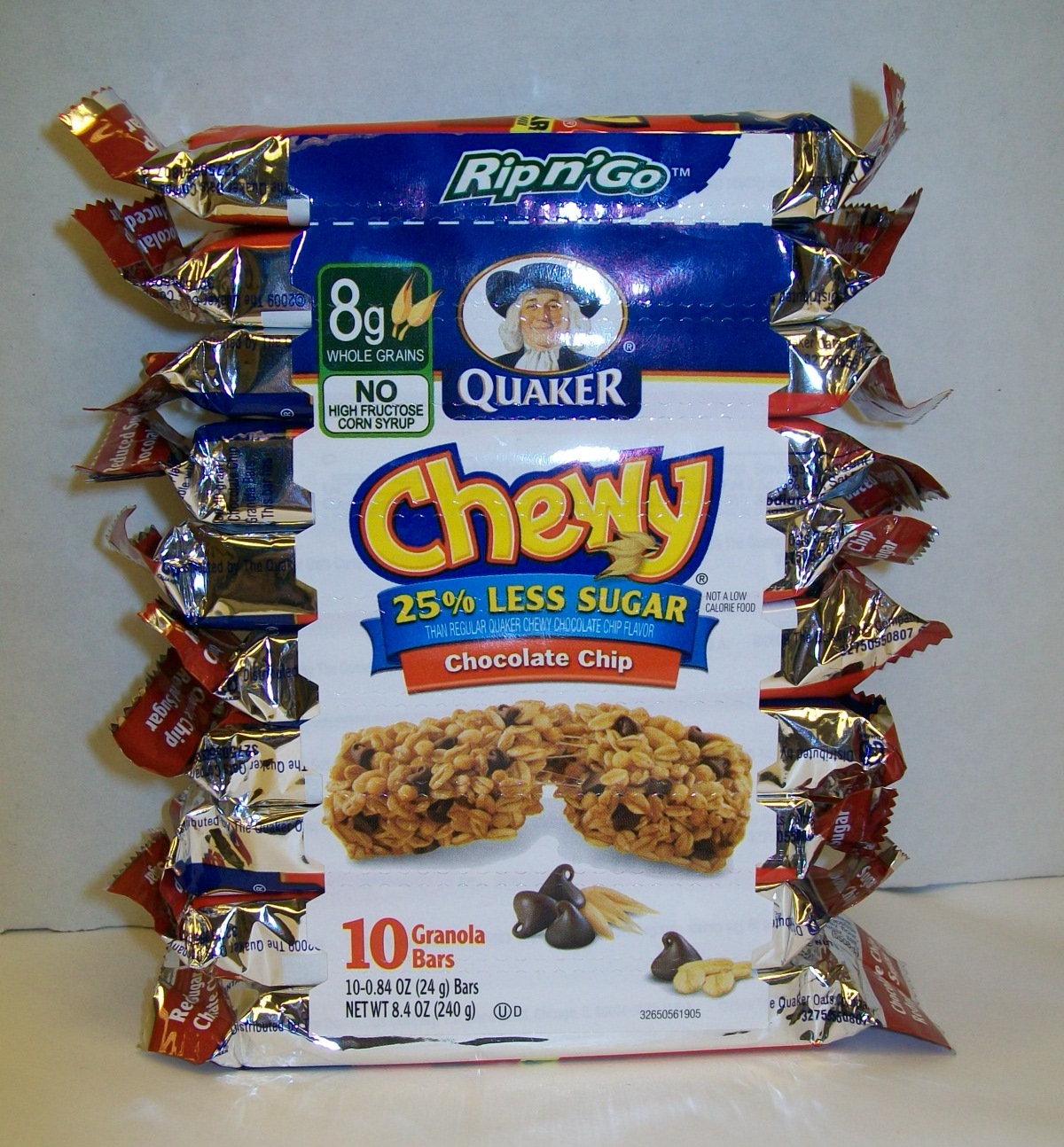
The latest sustainable packaging innovation to catch our eye is the Rip n’ Go Chewy Granola Bars by Quaker. Quaker has eliminated the paperboard packaging and replaced it with an adhesive label. The adhesive label also has perforated lines that allows for an individual bar to be ripped from the package while the other bars remain together.
Quaker’s Rip n’ Go packaging is quite the suitable packaging improvement, Quaker states the new package uses 33% less material than the standard paperboard package. Re-engineering their standard package also made the package more convenient for consumers; the adhesive packaging keeps the bars together until the last bar is finished rather than allowing them to float around in the kitchen cupboard or pantry.

Wednesday, May 26, 2010

Puma Thinks Outside of the Box

by Rob Busse, CPP - Chainalytics

Outside of the shoebox, that is. After 21 months of development and apparently 2,000 ideas, Puma has a design that will replace the common shoe box that has been around for dozens of years. The design consists of a “sustainable” cotton and recycled polyester bag and corrugated insert. Puma estimates that bag will slash water, energy, and fuel consumption during manufacturing alone by 60%–in one year, that comes to a savings of 8,500 tons of paper, 20 million mega joules of electricity, 264,000 gallons of fuel, and 264 gallons of water. Ditching the plastic bags will save 275 tons of plastic, and the lighter shipping weight will save another 132,000 gallons of diesel.
Unfortunately for Puma, they don’t expect that the design will save any money initially since the higher price of the materials will offset other savings. They are certainly hoping that the package will drive up sales dollars with all of the hype that has been created and with undoubtedly more to come. Is this going to make you buy a pair of Puma's?

Thursday, April 22, 2010

Hungry? Have Some Packaging!

by Eric Carlson, CPP - Chainalytics
Intego, who develops and sells desktop internet security and privacy software for Macintosh is shipping their products in packages made from organically-grown, edible materials. Using rice- and soy-based packaging, and vegetable-based inks, all of Intego’s boxes are derived from organic raw materials, and are edible.

Intego’s boxes come in two flavors: the company’s VirusBarrier X6 box will be bacon-flavored, and its Internet Security Barrier X6 box will be roast chicken-flavored. In addition, each box will include packets of low-fat, low-salt, naturally-flavored salad dressing: French dressing for VirusBarrier X6, and blue-cheese dressing for Internet Security Barrier X6. Standard license boxes, good for protecting up to two Macs, will contain two packets of salad dressing; family pack boxes, which protect up to five Macs, will contain five packets.

In addition, nutritional information for the box and salad dressing is printed on the sides of the boxes.

Just to note- only those boxes bearing a logo saying “eat me!” are edible.

Thursday, July 23, 2009

Making Weight

by Rich Lindgren, CPP - Chainalytics
Like any good heavyweight fighter, software giant Microsoft is reportedly cutting their new packaging weights by a targeted 40 percent. One example shared is the new software “Windows 7” package which should weigh about 37% less then the previous package design. Look for this new release sometime this fall.

Also the new package should be easier to open and more customer friendly.
See more detailed article here.

A 30 plus percent package reduction is very substantial and with Microsoft’s volumes, this will likely reduce tons of packaging from our world's waste stream. Along with that, it will likely save the company a good chunk of change in material costs and shipping.

What is your company doing to make weight?

Thursday, July 9, 2009

Cereal Box Sustainability?

packaging expertby Eric Carlson, CPP - Chainalytics


In the US, bag in box cereal has been a tradition … a staple at the breakfast table for nearly 100 years! Some of you value conscious consumers may have noticed a section in the cereal aisle devoted to bag only cereal – mostly marketed in my state (MN) by Malt-O-Meal. Many supermarket chains offer a private label cereal whether it is by bag only or side-by-side with the brand name cereal.

Bag only cereal has been offering similar product selections to the BIG name brands (Kellogg’s, Post, Nestle, Quaker) typically at less than half the cost to the consumer since the Generic craze swept the market in the mid to late 1970s. The brief success of the generic brands led retailers to develop private label lines to compete side-by-side with traditional brand name products. Private label ‘brands’ are common in most large food retailers today and this trend is also popular in many other markets with some private label brands vaulting to top brand status – think of the Sears brands of Kenmore & Craftsman.

Across the pond, the Sainsbury’s supermarket chain surveyed their customers to identify the 10 worst packages. Bag in box cereal is an early target and now Sainsbury’s is going to move all its private label cereals to bag only. It is unclear whether all cereal types will be able to withstand the shipping and handling. Kellogg's has indicated they don’t believe their signature product – Corn Flakes – can be adequately protected without the box. Recently, Kellogg's announced that it was test marketing a new size box to reduce the amount of paperboard by 8% and still provide a full 12oz of Corn Flakes.

Sainsbury’s has recently published a commitment to reducing packaging waste by 1/3 by 2015 while Tesco (Walmart rival in UK) has pledged to reduce packaging by 15% next year – 2010. In 2008, Walmart committed to reduce the amount of packaging by 5% from their Packaging Network by 2013.

Aside from any public pressure to ‘green’ their offerings, why would there be such a global trend by large retailers to reduce packaging waste? Because by minimizing packaging (size, shape, weight), these retailers are able to reduce packaging material and supply chain costs while at the same time promoting reduced packaging waste and increasing sustainability wins.

Thursday, July 2, 2009

Trash Your Fireworks Packaging

by Rob Kaszubowski, CPP - Chainalytics

As the Fourth of July holiday weekend nears, I’m sure many are already planning ahead for fun-filled activities of boating, barbequing, fishing, and surely fireworks! Of course it’s always important to remember safety first. This is especially true for fireworks and their proper disposal.

In today’s age of being “green” and environmentally friendly, the thoughts of recycling anything we can is constantly ringing in our heads. Many traditional fireworks are often made of recyclable materials like paperboard or corrugated, however, they also can contain metallic foils, rigid plastic bases and components and even left over explosive residue from the firework. All fireworks should be soaked in water and then properly disposed of in the trash – not the recycling bin.

Enjoy a safe and fun Fourth of July holiday!

Monday, June 22, 2009

How Can CPG’s Better Play the Green Card?

by Rich Lindgren, CPP - Chainalytics
If more consumer goods producers played the “Green” card, would the consumers buy into it? Often most companies try to go for a "green look" which usually means brown (kraft) packaging and toned down graphics but they have not really done much to change their sustainable impact. Usually a much more sustainable impact is attained by reducing materials and the overall size of the packaging, not just switching out materials.

Picture a scenario where instead of a package boasting 20% more product, a company right size their package & displayed a banner that shouted “20% Less Packaging”.
Maybe on the back or side panel instead of just nutrition facts they could tally trees saved or gallons of diesel saved by their packaging optimization changes.

Would shoppers in the aisles recognize this value and use it to make buying decisions?

Kellogg’s is testing a similar concept, that they call a “Space Saving Box” I believe their marketing angle is that the box better utilizes a standard kitchen cupboard or pantry, but I would venture to guess there is some good packaging material cost savings and sustainable wins with the Kellogg’s test design as well.

If it works, maybe they will put the Packaging Engineer on the front of a Wheaties Box some day….

Monday, June 15, 2009

Eat Your Packaging For Breakfast

by Rob Kaszubowski, CPP - Chainalytics

I recently had the pleasure of watching old re-runs of Mythbusters on a lazy, rainy Sunday afternoon. The second part of the episode was set aside to debunk the myth of which had more nutritional value … a fruity, sugary breakfast cereal, or the paperboard box it actually came in. Adam recalled how his mom always told him that the paperboard box was healthier than many of the sweet, sugary cereals he wanted as a child.

The team used a calorimeter to test the amount of calories in each specimen. The paperboard box was ground up and blended to a mush, and 1 gram of the mix was placed on top of the calorimeter and lit on fire. The same was done to the cereal mash. Once the samples finished burning the temperature was recorded and calculations were made. It was determined that the 1 gram of cereal had 9 calories, while the mix of the box had around 7 calories.

Next they tested the nutrients in each sample. It was deemed that the cereal had sugar, protein, fat and starch – just as the label on a cereal box would say. The box on the other hand had almost no notable nutrients.

Sorry mom… Myth Busted! The paperboard cereal box had some calories, but no nutritional value. Now I can feel guilt free the next time I’m eating my favorite morning cereal (Cinnamon Toast Crunch – in case you were wondering!).