While this has been in the works for quite some time, it is now official, all the authors of this blog will now only be publishing new content on the Packaging Section of the Chainalytics Blog. Follow this link for all our latest packaging and supply chain industry content you have enjoyed here.
Sincere thanks to all of our subscribers and readers here over the years! We hope you will continue with us on our new and improved platform. Don't worry, all this content will remain posted here as an archive.
Packaging Matters blog is a compilation of articles, excerpts, & opinion pieces on general packaging topics brought to you by a group of packaging consultants and engineers.
Showing posts with label Eric Carlson. Show all posts
Monday, April 2, 2018
Tuesday, October 4, 2016
How Will New Transportation Technology Impact Packaging Damage?
I am often involved in the replication of packaging damage
due to transportation hazards; frequently there is a new or surprising dynamic between
the trailer, the route and the products inside the trailer. It is important to know the dynamics of the
distribution route, which, with today’s technology and instrumentation, is
pretty routinely and easily accomplished.
Usually, we can utilize standard test methods for truck vibration, but
sometimes there is something in the specific route that may lie outside the
standard random vibration sequence. Just
recently, one of the commonly used testing standards ASTM D4169 went through a
change in vibration profile based on data gathered over the last few years; the
ASTM profile is now similar to the ISTA vibration profile.
With the advent of lower cost sensors, increased computer
power, Internet of Things (IoT), Physical Internet, ‘chronic’ driver shortages,
increased regulation on drivers and equipment, higher efficiency transmissions,
Google & Uber’s driver-less cars and the ever increasing pressure to reduce
operating costs, it seems trucking is on the verge of going through some pretty
radical transformations. A few technologies
currently in trial include platooning, driver assist and driver-less tractors.
What is Platooning?
Platooning is when two or more trucks travel in close
proximity to reduce drag and increase fuel efficiency for both trucks. This is
enabled by linking the driving and safety systems of the trucks together via
wifi. Some have likened platooning to be
a highly advanced form of cruise control; the trucks maintain an optimum, but
close distance. The lead truck uses long
distance sensors to look for ‘obstacles’ for collision avoidance. Further, the braking systems are linked together
for safety because the distance between the trucks is so small that the human
response may be too slow. The trailing
vehicle gets the greater fuel efficiency benefit.
![]() |
| Truck Platooning could create new dynamics for packaging and vibration frequencies |
Platooning is envisioned to extend to having a single driver
lead a series of autonomous vehicles; this would be most effective high volume
and hub to hub routes. This would be the
incremental step toward completely driver-less trucks. Many prognosticators suggest that driver-less trucks are still 10 years away, but platooning will be here as soon as next
year. Early adopters are favored to be
the biggest winners.
Additionally, auto makers are experimenting with platooning
for passenger cars. In my misspent
youth, many of us believed that if you would ‘platoon’ behind a big rig and you
were all speeding you would save gas and the police could not figure out a way
to pull you over; I can say with some authority that this was a youthful
misconception.
What could this new technology mean to me as a packaging
engineer sleuth?
Usually, a known lane or route from a manufacturing facility
to a distribution warehouse will result in a fairly predictable rate of damage. Typically little or no damage is observed on
these routes, but depending on load configuration, mis-application blocking and
bracing dunnage or other factors will produce occasional but usually a small
amount of damage.
I was recently involved in the evaluation of a very substantial
amount of damage to one load. This one load had highly atypical damage to the packaging
and the product; severity of the damage was excessive. This single load was just one of many the
company ships from its factory to one of many of their distribution centers. As with any conscientious company, they
launched an investigation into the cause(s) and this is when I was called
in.
When evaluating the output of a system it is important to
know whether the cause is the fault of the design of the system. The system in this case is the packaging
design, handling, load configuration & use/mis-use dunnage and the external
forces due to trailer/road interaction.
The protective packaging, if it performs as intended is designed to keep damages to
a minimum. The packaging is often tested
to ascertain its performance and ability to protect in the supply chain. If the variation of a system is out of the
normal range, such as greatly increased damage, it is important to determine if
the system variables have changed. If
the basic system inputs have not changed, the issue could be considered special
cause – special cause being a non-repeatable random input that causes the
variation in results or output.
Fortunately, in this case, we already had some good
transportation vibration data as well as some unique tests we developed to
tease out some of the unique dynamics of their products. In this case, we applied all the applicable tests
without matching the damage observed. We
also applied additional tests and test
thresholds to replicate of the severity of the damage. No matter how hard we tried to cause this
damage level (and we tried pretty hard), we could not come close to replicating
the damage observed by this one load.
In this case, we determined this particular damage occurrence was ‘special cause’. The leading
hypothesis was the driver left his intended route onto some pretty hellacious
dirt roads to visit his ailing grandmother; others suggested a less virtuous off-road
destination.
It will be some years before the self-driving technology,
ubiquitous GPS and electronic logging is all in place, but each new technology will
reduce the incidences of these ‘special cause’ events. I know that by the time these technologies
are available, I’ll likely be long retired and will gladly adopt driverless
vehicles to keep one more old man out of the driver’s seat.
Eric Carlson, CPP is a Senior Packaging Engineer for Chainalytics. With a thorough understanding of the forces involved in distribution and ASTM / ISTA test methods, combined with extensive understanding of dynamic attenuation, Eric’s design and engineering work focuses on damage prevention and protective packaging. Eric has been involved with a wide range of highly technical designs in applications such as; medical device packaging, military and space, electronics, test equipment, industrial equipment, recreational equipment & vehicles.
Image source: http://www.pcrevue.sk/files/photo/2016-04/13027/fc5e12/scania-trucks.jpg
Tuesday, July 28, 2015
Do You Need More Warehouse Space? Think Packaging!
I was recently reading an article on how to optimize your warehouse without increasing space. It got me thinking that most people see a warehouse space as a constraint, having limited options.
The warehouse optimization options in this article I read were to broken down into 3 basic features;
1) Inventory/sales information; know what you have (take inventory), know what you need (revise re-supply / safety stock quantity), know what you don't need and get rid of it.
2) Inventory management; basically implement WMS (and connect to pick & put-away operations) and then run a slotting exercise.
3) Expand the warehouse; after implementing 1 & 2 from above (this one is not very helpful).
Most of the operations I have observed (primarily for packaging assessments) have done a pretty good job of tracking inventory, understanding stock quantities and are usually running one of the very good WMS systems available. Slotting exercises are only slightly less common. Assuming your operation has completed the above two options listed above, does this mean that expansion is the next logical option?
There are many options for the constrained warehouse environment not listed in the article I read, but almost all of them require some type of fiscal outlay and operational disruption; detailed justification is required and capital budgets need to be allocated.
The result of a packaging optimization project is not only that the packaging is right-sized, but packaging costs generally go down overall, warehouse space allocation is reduced, better trailer utilization is achieved, resulting in lower logistics costs, and a boost to your sustainable metrics. The ripple effects of these cost impacts are especially high if you are manufacturing in Asia and shipping to the Americas or Europe.
Below is a packaging optimization example from a client that was importing telecom equipment from Asia into a warehouse in the central USA for shipments all over North America.
This particular example accounted for only a few SKUs as a part of a larger annual cost reduction initiative outlined for the business. When we started the project, we conservatively estimated a savings of $2MM in logistics and materials costs. When all was said and done, the cost savings and material reductions actually ended up totaling almost $4MM in efficiencies gained.

This Packaging Optimization project's cost savings calculations didn't include the cost savings from their 3rd party warehousing partners by way of the reduction in the number of rack spaces needed, trailer unloading times, and pallet handling charges.
These simple packaging changes effectively reduced warehouse space by 2/3 for these SKUs.
It cost virtually nothing to implement from a capital investment standpoint, and the best part, this caused no disruption to the business or daily warehouse operations!
Just think of what a packaging optimization program could do for your constrained warehouse space problems, AND your all-in packaging & logistics costs.
Have more questions? Chainalytics' Packaging Consultants can help. Simply email us at packaging@chainalytics.com.
By Eric Carlson, CPP
The warehouse optimization options in this article I read were to broken down into 3 basic features;
1) Inventory/sales information; know what you have (take inventory), know what you need (revise re-supply / safety stock quantity), know what you don't need and get rid of it.
2) Inventory management; basically implement WMS (and connect to pick & put-away operations) and then run a slotting exercise.
3) Expand the warehouse; after implementing 1 & 2 from above (this one is not very helpful).
Most of the operations I have observed (primarily for packaging assessments) have done a pretty good job of tracking inventory, understanding stock quantities and are usually running one of the very good WMS systems available. Slotting exercises are only slightly less common. Assuming your operation has completed the above two options listed above, does this mean that expansion is the next logical option?
I don't think so.
Making the Most of Your Existing Warehouse Space
Here are some of the other options for maximizing your constrained warehouse space:
- Reset the steel for narrow aisles (typically requires different lift trucks). This can be done in stages and can result in a lot more rack spaces.
- Use vertical landscape; many warehouses are not using all the vertical space possible. This also means you may need new lift trucks and you may need to replace some steel, but this can also be done in stages and or combined with the reset for narrow aisles. You may not need to buy all new uprights - some rack manufacturers can provide extensions to increase upright height.
- Implement a high density storage area for smaller products and or non full-pallet quantities; another option for these products is a high density vertical carousel.
- Change the layout of the space for better utilization (usually less common and less effective).
- Install mezzanines.
- Track guided very narrow aisles; again this will require new lift truck equipment.
Optimizing Your Packaging
Packaging Optimization Case Study
This particular example accounted for only a few SKUs as a part of a larger annual cost reduction initiative outlined for the business. When we started the project, we conservatively estimated a savings of $2MM in logistics and materials costs. When all was said and done, the cost savings and material reductions actually ended up totaling almost $4MM in efficiencies gained.
This Packaging Optimization project's cost savings calculations didn't include the cost savings from their 3rd party warehousing partners by way of the reduction in the number of rack spaces needed, trailer unloading times, and pallet handling charges.
These simple packaging changes effectively reduced warehouse space by 2/3 for these SKUs.
It cost virtually nothing to implement from a capital investment standpoint, and the best part, this caused no disruption to the business or daily warehouse operations!
Just think of what a packaging optimization program could do for your constrained warehouse space problems, AND your all-in packaging & logistics costs.
Have more questions? Chainalytics' Packaging Consultants can help. Simply email us at packaging@chainalytics.com.
Tuesday, July 14, 2015
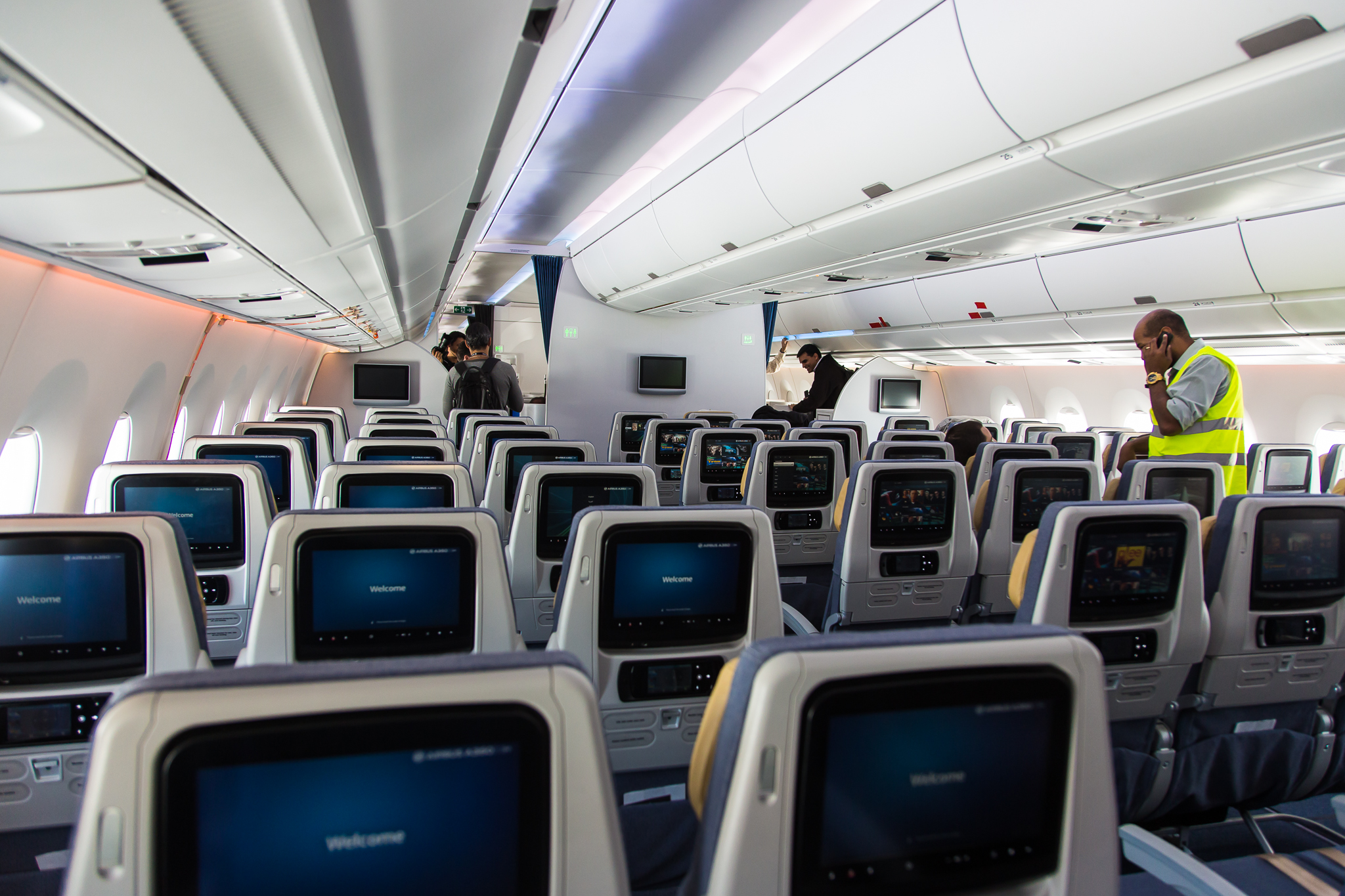
Packaging Airline Passengers for Safety
I would like to start off with a shout out to 17-year-old Raymond Wang of Vancouver for winning the top prize at the Intel International Science and Engineering Fair (ISEF), the Gordon E. Moore Award plus $75,000. Normally, I would just read the accomplishments of the youth science fair with passing interest, but this year, I fervently hope that Wang's winning entry will be adopted and implemented soon. Wang won the top prize by redesigning the airflow of passenger aircraft cabins, specifically to redirect airflow from top to bottom that will help drive airborne contaminants away from fellow passengers.
According to the June 13, 2015 Science News (SN) article "Teen wins big for pollution control at Intel ISEF"; "His adaption would send the air downward, reducing the number of germs inhaled by passengers by 98 percent, according to Wang's calculations. Also, the deflector should almost triple the amount of fresh air available to passengers."
HUZZAH!
I hope this highly practical engineering solution will soon improve my traveling experience. It has also gotten me thinking about airline travel as a packaging issue. Considering my profession, I'm surprised that I had not thought of the issue of airline passengers through my packaging lens. I am sure most of us that fly regularly (especially my big and tall friends) are very aware that seat spacing in coach has been compressed over the years which allow planes to carry more seats and thus more passengers. However, there is much more to consider when packaging passengers in an aircraft.
The first hurdle, not yet addressed or resolved, is that the seats are not sized for the passengers in neither first class nor coach; every seat space is the same regardless of the size of the passenger. In my profession, that is like asking Amazon to ship you a refrigerator or a coffee mug in a box sized for a microwave. This doesn't make sense from a packaging or logistics perspective. This single size constraint is not good for either the comfort or safety of the passengers who fall outside the fairly narrow space allotted. To drive greater space efficiency, I have recently seen an idea floated about the potential for stand-up 'seating' on some shorter haul aircraft. Unless they drastically redesign the shape of the plane from a slight oval to a much exaggerated oval, the airline will be just exchanging inadequate legroom for inadequate headroom.
Wang's design solution got me thinking about other aspects of packaging our fellow passengers. The aircraft is a classic modified atmosphere package (MAP); in this case controlling pressure and gas mix. Modified atmospheres are often employed to increase food safety (inhibit bacterial or fungal growth) and prolong shelf life (control water vapor). Depending on the product being packaged, the contents may be susceptible to various airborne constituents; oxygen is often purged, nitrogen is often flushed in. To continue the parallel and relevance of food safety, a food manufacturer would not and could not knowingly allow a contaminated product to be packaged alongside like items for fear of contaminating the entire package, but except in the case of the recent Ebola outbreak, this has been a non-issue for airlines.
With the advent of Wang's new airflow redirection and the impact on passenger cross contamination safety, I encourage all airlines to retrofit current aircraft to include Wang's air deflector. In light of some of the recent worldwide virus outbreaks (the cover story in the same issue of SN is the new threat of chikungunya virus), this invention should serve as a minimum standard for passenger safety and serve as a wake-up call to Boeing, Airbus and others to address passenger cross contamination in new and even more effective ways.
www.sciencenews.org || https://www.societyforscience.org || Twitter: @ericpkg
Thursday, July 2, 2015
Stickers or Lasers? The Change in Tracking Produce
Recently, I reread a story discussing a technology in which lasers are used to mark produce with the goal of eliminating those little labels on everything from apples to zucchini.
As with most disruptive technologies, there are often unforeseen hurdles; consumer acceptance, immature technology, integration into business processes, etc. The laser marking technology was getting a lot of press a few years ago and it was projected to replace the produce stickers; aka Price Look-Up code (PLU) labels.
What is a PLU Code?
The PLU code is a 4 or 5 digit human readable number that represents any of about 1400 unique produce varieties.
![]() |
| Examples of Fruit Labeled with Laser Technology |
The History of PLU’s
Many of you reading this will remember that for most of your life (prior to 1990) there were no PLU stickers on fruits & vegetables. To add slightly more perspective, it wasn’t until the 1980s that it was common for grocery stores to have barcode check out systems.
So, the two obvious questions are:
- What changed in the grocery industry just prior to 1990 that would have created the demand to add what seems to be an overly obvious label?
- Why do we need a label on a banana or for that matter an apple?
It turns out there are very good reasons for a PLU code label.
What Changed in the Grocery Industry?
Target announced in 2010 that it planned to add fresh food to half of its stores by the end of 2011. However, Target is really the upstart big box store in the grocery industry, but growing fast. Walmart has been into the grocery business a little longer; they started adding grocery sections to their stores in 1988 and boosted their presence in the grocery market with the launch of Neighborhood Market in 1998. I honestly don’t know the back story, but hmm … that starting date is very coincidental.
The fresh produce section of your local grocery store has gone through a pretty incredible transformation in the past 25 years. In the old days the most exotic thing we could get were bananas, and sometimes supply was a little sketchy. Sure, seasonal fruits and vegetables were available, but the seasons were very short. Today, we have fruits and vegetables from all over the world with the biggest transformation in a supply chain of produce from Latin America and South America. We can now get grapes and berries any time of the year, with very extended seasons for almost everything else along with a vast array of other regional and ethnic specialties.
What Makes the PLU Label so Important?
The PLU not only exactly identifies the produce with a human readable number, but there is a special barcode and a lot of information on the label. Sure, the number identifies the specific type of apple (in case you’re wondering, there are 208 individual PLU code numbers for apples alone), but if the number is 5 digits and starts with ‘9’, then it is an organic apple and an ‘8’ indicates genetically modified produce … who knew?
So how does all this tie together? The short answer is that the PLU code label provides granular and timely information to the grocer that drives supply chain efficiencies. The simplest benefit for the grocer is accurately charging the consumer. There is now so much efficiency and information in the system that the grocer can offer a huge variety of products and bring them in just-in-time (JIT); they know what sells and what doesn’t. The grocery check-out system provides pull through information to the supply chain to generate automated JIT re-supply from a central warehouse with minimal loss to ensure my local market will have fresh stock.
The PLU code label is just the visible component of this huge change in supply chain prowess; increases in computer processing power, broadband connectivity and let’s not forget to give a nod to the chemists. Scientists have been tinkering for years with the chemical cues that ripen and delay ripening using ethylene gas and other molecules. The modern day supply chain consists of many impressive elements, especially the packing & ripening warehouses that tailor the exact amount of ripening agent to certain varieties of produce just prior to shipping to the grocer.
I am not entirely sure how those labels are applied, but that is an operation I would very much like to tour. Although I don’t like the inconvenience of peeling the PLU label off prior to use, I most definitely like the variety in my local grocery store.
So what is hampering the laser etching technology from being implemented in some categories of the produce marketplace? I imagine thin skinned products like plums or nectarines might be an issue, but think what about bananas and melons? Perhaps this laser technology can even add local grower information alongside the standard PLU data to influence consumers to pick a farmer branded produce
. By Eric Carlson, CPP - @EricPkg
Pic from http://modernfarmer.com/2013/06/will-laser-tattoos-replace-sticky-labels/
Eric Carlson is a Senior Packaging Engineer on the Chainalytics Packaging Optimization team. His track record of success ranges from developing packaging solutions for high cost and complex systems to implementing net cost savings through supply chain damage reduction.
.
Pic from http://modernfarmer.com/2013/06/will-laser-tattoos-replace-sticky-labels/
Eric Carlson is a Senior Packaging Engineer on the Chainalytics Packaging Optimization team. His track record of success ranges from developing packaging solutions for high cost and complex systems to implementing net cost savings through supply chain damage reduction.
Wednesday, August 6, 2014
Chromatografting: A New Water Repelling Technology for Corrugated?
The best and worst feature of paper is its ability to absorb and retain water. The paper making process is a water-intensive operation that allows us to make paper efficiently and also allows us to recycle paper and corrugated materials. There are many products we count on every day for their water absorbing properties; in particular for personal hygiene. However, for those of us involved in the packaging and the supply chain, water and water vapor causes trouble by weakening corrugated and other paper products.
Corrugated is the most common material used for making shipping boxes and transport packaging and moisture can weaken the strength of the box very quickly and dramatically. Cranking up the relative humidity to 80% reduces stacking strength by one-third. If the corrugated gets wet, stacking strength is virtually ZERO. Liquid water can also cause sufficient cosmetic damage to cause the box to be unsaleable whether the product inside damaged or not. This is why it is so important to keep your corrugated boxes dry in your supply chain.
There are coatings for corrugated materials, some better than others. I have had countless cups of coffee in paper cups, but the reason the cup holds together is because the inside, and sometimes the outside is lined with polyethylene. The polyethylene coating keeps my coffee cup from becoming a soggy mess in my hand, but makes the cup very UN-friendly to the paper recycling process.
There have been many efforts in the past to come up with a new way to make the paper water resistant and still work in the repulping operations that converts post-consumer fiber material back into paper. The most common coatings used today use water-based chemistry to coat an entire side (flood coat) of material (paper or corrugated) using a wet roller and controlling application thickness very closely to assure the product dries fully in the converting process.
Last year a new kid on the block began touting a new process and some new chemistry to bring water resistance to the paper and corrugated industries. PackagingDigest indicates that BT3 Technologies are wet coating the web, then controlling the vapor pressure of the fatty acids onto the paper substrate with heat to drive off the excess. The fatty acids are reportedly from plant based chemistry. Traditional vapor deposition works by laying down molecular layer(s) onto an entire surface. Similarly, BT3 is coating the entire surface; however, the target of the coating is the hydroxyl group on the paper to which their fatty acid can bond. They refer to this combination of wetting, heating and chemical bonding as ‘chromatografting’. This year, Packaging Digest reports that BASF signed an agreement with BT3.
There has been a lot of buzz in the media lately about coatings that are super water repellent (my new Samsung phone is claiming to be water resistant, but I’m not going to be the one to test it on purpose). Most of these new water repelling coatings are also based on some type of very thin layer (typically a single molecule thick) of super-hydrophobic material.
BT3 Technologies will need to scale up their process window (currently at a web of 9.5”), however, their process speed is well within corrugated process windows at ~1300 ft/min. Additionally, BT3 is creating additional grease and gas barriers by combining their chromatografting with previously treated paper with polyvinyl alcohol (PVOH). With the addition of BASF chemical engineering muscle, it’s possible this may become a viable and valuable new coating.
Leave a comment where yous see the greatest potential for this technology in Packaging!
Tuesday, March 18, 2014
HealthPack 2014 and the Road Ahead for Medical Device Packaging
By Eric Carlson, CPP
Chainalytics
Last week, I had the opportunity to attend HealthPack for the ninth consecutive year. In case you missed it, this blog will recap the annual event and highlight what you should look out for in the medical device packaging industry in the year ahead.
First, let me start by mentioning that 2013 marked the bittersweet end of an era; it was then that the dynamic co-hosting duo of Curt Larsen and John Spitzley finished their lauded run. Many thanks to both of them for helping shape the conference with quality and relevance, making it the premiere medical device packaging conference in the U.S. An additional round of kudos goes to the newly-minted HealthPack Advisory Committee that currently consists of a group of remarkably talented women:
- Daphne Allen | Editor, Pharmaceutical and Medical Packaging News
- Jan Gates | Owner & Principal Packaging Engineer, PackWise Consulting
- Karen Greene, CPP | VP of Sales and Technology, Life Packaging Technology
- Jennifer Griffin, CPP | Principal Packaging Engineer, Medtronic Vascular
- Laure Larkin, CPP | Manager of Packaging Qualification, DePuy Synthes
HealthPack 2014 returned to Albuquerque with new host Jim George. Jim is Director of Education at the Kellen Corporation, the same company that took over the national management of IoPP in late 2011 after it merged with Landon Farrey & Associates.
Programming this year was fairly consistent in regards to the quality of content and variety of topics related to medical device packaging. New this year was a pre-conference group discussion led by Daphne Allen. It was designed to mine the collective knowledge of the attendees about trends and possibly a glimpse into future developments in the industry. I would not be surprised to see this return in 2015.
HealthPack 2014 was well attended; each session had near capacity crowds.
The conference officially kicked off with a keynote presentation by Jackie Elkin (Medtronic) speaking on a very relevant topic, unique device identification (or UDI). The complexities, trends, and challenges were well expressed and, like all the other presentations, will be available for attendees to download. Jackie indicated there will be many challenges lie ahead for the global harmonization of UDI. There also appears to be lingering challenges related to the implementation of current FDA rules.
A recurring and popular program has been the IoPP Medical Device Packaging Technical Committee (MDPTC) Nurses Panel & Survey. Here, too, there were changes in personnel; however, these changes were driven by the coincidental family planning of the esteemed Jennifers (Foreman and Benolken). Congratulations to the moms!
Russell Darley of Sealed Air stepped in to host the nurses panel this year along with Charlie Robnett, the new Education Subcommittee Chair, also with Sealed Air. As usual, the nurses were frank and candid in their feedback and also, as usual, this program elicited the most audience participation. The annual nurses survey was replaced this year by a new Voice of the Customer (VOC) survey that specifically looked at our own medical device packaging community; the survey was led by Clemson grad student Kathryn Thompson. Hats off to Russell and Kathryn for including instant polls in the presentation; the polls truly seemed to engage the audience and were effective at collecting instant feedback from the audience.
The first day also included a slot for standards updates. There are many updates from ASTM, AAMI and ISTA. Be aware that ASTM D4169 is going through a substantial rewrite specifically in the truck vibration profiles. Karen Polkinghorne (DuPont) provided an update on Tyvek transition. Two additional interesting presentations by Drs. Ondrea Kassarjian and Laura Bix led us to think further about the human and package interface and the application of affordances for intuitive design, respectively. I believe most of us were faced with a new definition and use of the word "affordances."
The keynote session on day two was an overview of the U.S.-E.U. Free Trade Agreement by Julian Carroll. Julian gave a fascinating and well-delivered discussion of the challenges ahead. Following Julian was Laure Larkin who shared her concepts of applying Quality by Design (QbD) developed for pharmaceuticals to perform stability studies for medical devices.
Also, I personally have not heard a more engaging speaker on the topic of statistics, so I give a shout out to Steven Walfish of Becton Dickenson. Brian Ingram also discussed heat seal coatings which was a sort of pros and cons presentation. A panel discussion was next on the agenda to explore several package testing developments. There were many questions from the floor and the panel – consisting of Dan Burgess, Jennifer Griffin, Scott Levy, Wendy Mach and Oliver Stauffer – handled the tough questions extremely well.
The MDPTC then gave an update of their activities to the main group. New officer elections will be held soon, but it appears the leadership team will remain fairly stable over the next two years. Similar to the standards update, the MDPTC also asked for volunteers and participants to become more involved.
Finally, Dr. Henk Blom ended the program with an interesting presentation in which he is trying to tease-out some predictive modeling from Taber rub tester data. He, or rather his plucky staff of interns, has performed thousands of rub tests on many polymer materials. More work needs to be done, but the data indicates that additional work and some inter-laboratory studies may help drive out variability in the methods and narrow the data variability.
Overall, it was another good conference. I look forward to attending next year when it’s held March 3-5 in Norfolk, VA.
Friday, March 7, 2014
Chainalytics & Stratasys to Co-Present at 2014 TransPack Forum
The annual ISTA TransPack forum is a great event showcasing some of the
most interesting and technical topics on transport packaging and testing. Held each year, TransPack brings together a global consortium of packaging industry leaders
for a ‘spring break’ learning opportunity.
TransPack brings together industry professionals to share current best
practices and packaging educators & test labs to review their research advancing
our understanding of materials and environmental conditions. Schools and agencies participating this year
are Michigan State, Clemson, Cal Poly State University, Kasetsart University (Thailand),
Virginia Tech, ITENE, BAM Federal Institute for Materials Research and Testing,
Korea Agency for Technology and Standards (KATS).
This year, the lineup of presentations appears to be as good as usual. Included in the program is a good mix of topics
to optimize packaging design including: paper reducing stretchwrap, edge
protection, unitload stability, returnable systems in Northeast Asia, and clamp loading. New this year is a segment dedicated to sustainability;
the segment will include a Panel Discussion with participation and updates from
Ameripen, Incpen, Fibre Box Association and Sustainable Packaging Coalition
(SPC).
As a TransPack first, Stratasys, the leader in 3D printing will be
co-presenting with Chainalytics to stress the importance of packaging engineering design input to improve product robustness to best protect against
expected environmental hazards.
Please send us a quick email or leave a comment indicating you will also
be in Orlando for the ISTA TransPack Forum!
Wednesday, September 18, 2013
Is natural rubber bouncing back?
by Eric Carlson, CPPChainalytics
In today’s age of plenty, there are many things that keep the world turning to which we give scant thought. Times have not always been so plentiful though. During World War II, for example, many materials became scarce; one of them was rubber. Fortunately, after many years of development, synthetic rubber started to become commercially viable and available during the early part of the war. (This was especially fortunate for the Allies, as the Axis powers controlled almost all of the world’s natural rubber plantations.) Synthetic rubber was and still is mostly synthesized from petroleum products.
As an avid fan of Science News magazine, I recently read their article on “new” potential sources of natural latex, the plant sap which is the basis for rubber. I learned that rubber tree plantations cannot be located in Central and South America because of a fungus that attacks dense stands of rubber trees. Only in Southeast Asia (where 90% of natural latex originates) are there rubber tree plantations capable of sufficient density to be commercially viable.
What would happen if the natural sources of latex were dramatically rationed? Why, you might ask, is there such a concern for natural sources of latex? Why have large governments around the world begun substantial funding for programs to identify new sources of latex?
The answer, in part, is that rubber from natural latex is critical to everyone’s supply chain. Apparently, the natural latex from rubber trees contains trace chemicals which make the resulting rubber more heat resistant. For this reason, it is preferred to synthetic rubber for many applications, including aircraft and truck tires. (Refer to the inset chart.)
With the cost of petroleum on the rise, and concerns about the sole sourcing of raw materials, companies and governments alike have their renewed interest in finding alternate natural rubber sources. While many plants produce small quantities of latex, two forms have gained recent popularity:
Until any of these options becomes commercially viable, you can bet that every time you ship a package using your favorite overnight carrier, the tires on their vehicles depend on the natural rubber latex from ParĂ¡ rubber trees.
What would happen if the natural sources of latex were dramatically rationed? Why, you might ask, is there such a concern for natural sources of latex? Why have large governments around the world begun substantial funding for programs to identify new sources of latex?
The answer, in part, is that rubber from natural latex is critical to everyone’s supply chain. Apparently, the natural latex from rubber trees contains trace chemicals which make the resulting rubber more heat resistant. For this reason, it is preferred to synthetic rubber for many applications, including aircraft and truck tires. (Refer to the inset chart.)With the cost of petroleum on the rise, and concerns about the sole sourcing of raw materials, companies and governments alike have their renewed interest in finding alternate natural rubber sources. While many plants produce small quantities of latex, two forms have gained recent popularity:
- Kok-sagyz (pronounced “coke-suh-GEEZ”), a dandelion from Kazakhstan; and
- Guayule (pronounced “gway-OO-lay”), a shrub from the U.S. Southwest.
Until any of these options becomes commercially viable, you can bet that every time you ship a package using your favorite overnight carrier, the tires on their vehicles depend on the natural rubber latex from ParĂ¡ rubber trees.
Thursday, October 11, 2012
Will innovative ethylene process create a supply and value chain reaction?
by Eric Carlson, CPPChainalytics
Recent headlines about Honeywell’s new one-step conversion process from natural gas (methane) to the monomer ethylene (also known as ethene) may not grab your attention right away; but, don't be too quick to dismiss this recent innovation. This little, symmetrical molecule is more integral to your professional and personal supply chain than you may think.
Ethylene Molecule
- Styrene which is most often used as polystyrene in packaging foam and insulation;
- Ethylene oxide, a precursor for Ethylene Glycol (i.e. antifreeze); and
- Ethylene Glycol, a precursor for polyethylene terephthalate (or PET) which is used extensively in beverage bottles and as "polyester" in fibers.
Current ethylene processing is an energy-intensive and indirect method, requiring repeated heating and quenching steps that produce many chemical compounds. The new Honeywell process appears to use a more direct route from methane to ethylene using less energy. With the cost of natural gas at an all-time low and the U.S.’s abundant supply of this raw material, this is good news! The Honeywell process could hold the line on price increases related to packaging for many products that we make (and buy) every day.
Honeywell’s Gautam said, "The new technology would be cost effective even if natural gas prices rise much higher. It could become a polymer supply-and-value-chain-reaction."
So, not only does ethylene keep us clothed and fed, but it has the potential to significantly impact today's supply chains. Pretty amazing for one simple molecule, huh? What implications do you think this breakthrough process will have in your supply chain?
Subscribe to:
Posts (Atom)