While this has been in the works for quite some time, it is now official, all the authors of this blog will now only be publishing new content on the Packaging Section of the Chainalytics Blog. Follow this link for all our latest packaging and supply chain industry content you have enjoyed here.
Sincere thanks to all of our subscribers and readers here over the years! We hope you will continue with us on our new and improved platform. Don't worry, all this content will remain posted here as an archive.
Packaging Matters blog is a compilation of articles, excerpts, & opinion pieces on general packaging topics brought to you by a group of packaging consultants and engineers.
Showing posts with label Packaging Optimization. Show all posts
Monday, April 2, 2018
Tuesday, July 5, 2016
Small Changes Can Bring Big Supply Chain Savings
by Rich Lindgren, CPP
Chainalytics
In the world of Consumer Packaged Goods (CPG) there is an eternal struggle between the demands of marketing, operations and optimizing your packaging for the supply chain. As an everyday consumer, you probably see packages all over the grocery store where you wonder why there is so much air around the product or food in the packages you purchase. For the most part, air is waste and below you will read why!
There are a few reasons for this air. The first is driven by operations and that is the functional air space so they can run their automated filling equipment at speeds which maximize efficiency and profitability. For the most part this is a good thing, this ultimately contributes to you getting the products you want at your local stores at a fair price. Secondly and usually the larger driver for the size of the packaging is due to marketing billboard space. When you walk down the aisle at Target or Walmart, almost every package is a mini billboard of sorts trying to call your attention much like driving down the interstate in your car.
The bigger the packaging face the larger the product image or area that can be used by marketing and graphics teams to inform you and entice you to put it in your cart. Packaging size also has an inherit suggestion to the amount of product inside said package. Consciously or subconsciously if you see two pizza boxes next to each other for the same price, you may select the larger one without actually reading the ounces labeled in small print at the bottom of the carton, thinking you are getting a better value. Sadly, not very often is a larger package an indication of amount of product or food inside and even can be consider non-functional slack fill, which can lead to fines on companies.
Typically the process works as follows, a leading brand owner will launch a product into the market with a large billboard area so they can "be heard" on the shelf to tell you what is new and great about the new product. If the product is successful, it is natural for competing brands to launch their "me too" versions into the market to grab a share of the new market. When those "me too" products launch they often copy the size of the current market leader for that product category whether they need the space or not, so they can look the same size wise on the shelf.
As a packaging engineer the trick is to balance the concerns of marketing and operations while delivering an optimized packaging system that will serve the company's bottom line. Below I will outline a case study for a project our team delivered for a past frozen foods customer. This particular frozen pizza item was the follower or the "me too" in the market. Even though the product was a different shape and size then competitor, they launched product in a paperboard carton the exact dimension of the competitor.
We proposed a sensitivity analysis showcasing the range in cost savings, while maintaining a similar size graphic facing. The key was finding the sweet spot for this packaging system while meeting the needs of the marketing team. Even though there were other options with larger supply chain savings, marketing would not support the billboard reduction. The selected option is what we labeled as "Visual Indifference". Basically it was the smallest change I could find that would still make a big impact. Such a small change, that it would be impossible to perceive it in a freezer case.
By reducing the length and width of the carton by just an 1/8" in each direction and reducing height or riser panel by a 1/16" we made a huge impact. The 1/8" reduction allowed us to add a whole row of cases along a 53" Dry Van trailer as well as one additional row at the back of the trailers. The 1/16" reduction allowed for pack out ratio change on the freezer shelf. Getting more pizzas in a freezer leading to less out of stock. This also helped propel a change going to 14 count shipping case from 12 count. In the end, this also allowed one additional row of pizza cases along the top of the trailer as well, in the end the customer got an additional 6,848 pizzas on each truck shipped.
In the end, with an annualized savings of $600K, the time to payback was only 7 days. Adding on top of that, there was a great sustainable story to tell as well. On top of the hard savings, the reduced out of stocks, reduced touches and many other soft benefits throughout the supply chain.
Does it make you wonder what products in your company's portfolio could have a similar opportunity for greater efficiency and supply chain savings?
The packaging team at Chainalytics focuses on packaging cost reduction efforts that lead to a chain reaction of savings across the entire supply chain for their customers.
Chainalytics
In the world of Consumer Packaged Goods (CPG) there is an eternal struggle between the demands of marketing, operations and optimizing your packaging for the supply chain. As an everyday consumer, you probably see packages all over the grocery store where you wonder why there is so much air around the product or food in the packages you purchase. For the most part, air is waste and below you will read why!
There are a few reasons for this air. The first is driven by operations and that is the functional air space so they can run their automated filling equipment at speeds which maximize efficiency and profitability. For the most part this is a good thing, this ultimately contributes to you getting the products you want at your local stores at a fair price. Secondly and usually the larger driver for the size of the packaging is due to marketing billboard space. When you walk down the aisle at Target or Walmart, almost every package is a mini billboard of sorts trying to call your attention much like driving down the interstate in your car.
![]() |
| Aisle of "Packaging Billboards" |
Typically the process works as follows, a leading brand owner will launch a product into the market with a large billboard area so they can "be heard" on the shelf to tell you what is new and great about the new product. If the product is successful, it is natural for competing brands to launch their "me too" versions into the market to grab a share of the new market. When those "me too" products launch they often copy the size of the current market leader for that product category whether they need the space or not, so they can look the same size wise on the shelf.
As a packaging engineer the trick is to balance the concerns of marketing and operations while delivering an optimized packaging system that will serve the company's bottom line. Below I will outline a case study for a project our team delivered for a past frozen foods customer. This particular frozen pizza item was the follower or the "me too" in the market. Even though the product was a different shape and size then competitor, they launched product in a paperboard carton the exact dimension of the competitor.
We proposed a sensitivity analysis showcasing the range in cost savings, while maintaining a similar size graphic facing. The key was finding the sweet spot for this packaging system while meeting the needs of the marketing team. Even though there were other options with larger supply chain savings, marketing would not support the billboard reduction. The selected option is what we labeled as "Visual Indifference". Basically it was the smallest change I could find that would still make a big impact. Such a small change, that it would be impossible to perceive it in a freezer case.
![]() |
| Small changes to the retail carton leading to big savings! |
By reducing the length and width of the carton by just an 1/8" in each direction and reducing height or riser panel by a 1/16" we made a huge impact. The 1/8" reduction allowed us to add a whole row of cases along a 53" Dry Van trailer as well as one additional row at the back of the trailers. The 1/16" reduction allowed for pack out ratio change on the freezer shelf. Getting more pizzas in a freezer leading to less out of stock. This also helped propel a change going to 14 count shipping case from 12 count. In the end, this also allowed one additional row of pizza cases along the top of the trailer as well, in the end the customer got an additional 6,848 pizzas on each truck shipped.
![]() |
| Click Images to Enlarge |
![]() |
| Total Supply Chain Impacts |
Does it make you wonder what products in your company's portfolio could have a similar opportunity for greater efficiency and supply chain savings?
The packaging team at Chainalytics focuses on packaging cost reduction efforts that lead to a chain reaction of savings across the entire supply chain for their customers.
Wednesday, December 30, 2015
Combating Driver Shortage Through Packaging
If you pay attention to transportation and long haul trucking rates, you know that the current driver shortage is a real problem and is causing increased rates and reduced load acceptance ratios. For more details on the driver shortage and how it effects transportation costs, check out this article by Michael Kilgore.
The most widely accepted solution to the driver shortage is to increase compensation for over the road truck drivers so that the profession remains competitive against other appealing semi-skilled construction jobs that are on the rise. That will definitely help with the supply end of the equation and probably deserved for quality drivers, but at the same time those wage increases will just transfer through to your company in the way of rate increases across lanes.
Here is an alternative way of thinking about this problem from the the demand side of the equation. Shipping less product is obviously not a solution to reduce demand and unless you own your fleet, you can't really hire or pay drivers more, you rely on your carriers for that. So lets look at something you do have control of. Believe it or not, it starts with your packaging, specifically your distribution and unit load packaging.
![]() |
| Do the Back of your Trailers resemble this? |
Many customers we help achieve 5-15% improvements in full truck load densities, which usually translates 10-15% less truck load shipments. This improvement obviously generates immediate transportation savings but also reduces the demand on their carriers and improved load acceptance ratios. Now while one company reducing a few truck load shipments a week is not going to solve the driver shortage by itself, but a small percentage shift across the market would. Not to mention, this would result in significant savings for companies and a large reduction in truck emissions from a sustainability standpoint.
To learn more about Packaging Optimization, follow the link.
Tuesday, August 11, 2015
How McDonald’s Rides Package Design into New Market
Recently, McDonald’s announced a new McBike packaging initiative, aimed at making bike-thru traffic possible at their 36,258 restaurants worldwide (Statista). Launched in Copenhagen, Denmark—one of the most cyclist-dense cities in the world—McBike is also scheduled for launch other global cities known for their cycling populations.
The McBike package is relatively simple; a little folder with two pockets for a meal, a hole in the bottom for a drink, and a looped hook at the top to go over handlebars. What the package has created is a bit more complex - an entire new market for the fast food chain.
A quick look at commuter biking
|
According to The League of American Bicyclists, biking to work in the United States has grown 62% from 2000 to 2013. Although a mere .25% of the U.S. population bikes to work, the McBike program might be introduced to active, bike-friendly cities like Portland, Oregon where upwards of 6% of the population bikes to work, or in small cities, like Davis, California, where 24.5% of commuters bike.
In the United States, Millennials increasingly live in urban locations; are “multi-modal,” choosing the best transit mode (driving, public transit, bike or walk) to reach their location; and are a likely demographic for the McBike initiative.
Even if the new packages don’t make it to the states, they could still have a substantial impact elsewhere. Take Copenhagen, Denmark for example, where over 30% of the population bikes to work. If this package succeeds in countries with large cycling communities, then McDonald’s stands to gain quite a lot of business volume.
Figure 1. Method of Commuting Trips (City of Copenhagen, 2008-2010)
Source: Average 2008-2010 TU Data, Danish Annual National Transport Survey
It all comes down to knowing your demographics and experimenting with ways to capture a broader array of clientele. A bicyclist demographic could include active and health conscious adults, adults that don’t have a car, children, and people in communities where biking is the norm.
The McBike is certainly an interesting packaging concept and a great attempt to bring cyclists to McDonald’s. However, I’m not completely sold on the new McBike package. I have a hard time believing that the package actually makes for an easy ride. My primary concern is with how deep the carton is: It appears the bottom of the beverage container hangs well below the top of the front tire.
If you’ve ever ridden a bike while attempting to carry packages on your handlebars—and instead chosen a bike basket or panniers to carry groceries or other items—you know that anything that interferes with your front tire’s turning radius can create a handling problem. In the case of the McBike package, there is nothing within the package to keep it from swaying, which could potentially create problems with the beverage container striking the wheel, possibly making a mess or instigating a crash. It also looks like the package might sit a little too close to the center of bike depending on the cyclist’s handlebars. Overall, it is a unique branding and packaging idea, and if it works, the McBike program could potentially bring in a lot of drive-in business in places where bikes are the primary vehicles on the road. As someone who lives in a urban area, this seems like a realistic idea for my shorter rides, but it seems like a bit a hassle if you want to go a few miles or more with.
McDonald’s is proving that innovation is key to meeting your customers’ needs. More business is good business and an innovative packaging program can be an important part of broadening your company's reach and creating growth. But on first glance, a bit more package engineering may make sense.
By Noah Rabinowitz | Packaging Designer
Sources: Statisa.com; bikeleague.org, transportpolicy2014.blogspot.com, youtube.com
Wednesday, August 5, 2015
Not Enough Product in that Package? Blame It On Slack Fill
By: Rob Kaszubowski, Sr. Packaging Engineer
Food manufacturer, Perfetti Van Melle, was recently handed a hefty $5 Million law suit for a slack fill violation on their Mentos gum (50 count container).
Essentially, the firm was accused of committing slack fill deception--putting a small product, inside a much larger container to make the product packaging look much bigger and ensure it takes up a bigger spatial/visual footprint on a shelf.
What Exactly is Slack Fill?
Slack fill is the difference between the actual capacity of a container and the volume of product contained within the enclosed container. While federal laws administered by the FDA regulate slack fill on behalf of consumers, states also weigh in on the issue.
In California, a slack fill violator is a package that is filled to “substantially less” than its capacity for other than any one or more than the applicable exceptions (California Fair Packaging and Labeling Act, Cal. Bus. & Prof. Code § 12606(c) (1-15)).
Wherever they originate, slack fill laws are aimed at protecting consumers from being duped into buying a packaged product that is misleading. A container that does not allow the consumer to fully view the fill levels is deemed deceptive and misleading unless it contains “functional” slack fill, there are six exceptions which are outlined here.
A Closer Look at the Mentos Slack Fill in Action
Oftentimes, articles in the business and trade press mention the offending product packaging and the amount the company was penalized or fined, but fail to show exactly “how bad” the slack fill was or exactly what the ratio of product vs. packaging was in these law-breaking products.
We were curious ourselves, so we bought a few containers of this Mentos gum to take a deeper dive.
Take a look at what we found. Does this packaging deceive you?
Upon opening the container, it looks to be approximately 2/3 full.
Further analysis shows this container to be 72% full by weight (28% empty or non-functional slack fill). This is gathered from the ratio of product currently in the container compared to the maximum weight it can hold of the same product.
How You Can Measure the Immeasurable | ||
These images above might make the everyday consumer feel deceived upon opening their new purchase and lead them to think “I can’t believe there isn’t more product in this package.”
As a team of packaging engineers, we are focused on optimizing packaging and improving cube efficiencies throughout all supply chain distribution channels—from manufacturing all the way to the retail shelf. We couldn't help ourselves...
We shortened the Mentos Gum container by 1/2" inch. The original pallet could only hold 3,120 containers. The newly optimized, shortened container allows for a total of 3,744, or 624 more units per pallet - a 20% improvement in pallet utilization!


With proper packaging, the amount of air space in these individual canisters could be reduced to allow for greater than 20% improvement in pallet counts simply by adding an extra layer of product to the pallet. An incremental change in a package this small can lead to a cascading effect of material savings, logistics savings, warehousing improvements, less out of stocks at retailers, and so on and so forth.
So after reviewing the Mentos packaging dilemma and how much product is actually in the packaging, would you consider 72% full to be bad? What about 28% empty?
If you feel your products may be a slack fill risk, it’s often a good approach to perform an internal audit and slack fill review. Aside from taking a preventative step to avoid any slack fill penalties, there may be additional cost savings tied to some of those incremental packaging savings.
The Chainalytics Packaging Optimization practice is a seasoned team of packaging engineers, dedicated to addressing risks and opportunities end-to-end throughout the supply chain.
Questions? Contact us at Packaging@chainalytics.com or give us a call at +1 612.260.7845.
The Chainalytics Packaging Optimization practice is a seasoned team of packaging engineers, dedicated to addressing risks and opportunities end-to-end throughout the supply chain.
Questions? Contact us at Packaging@chainalytics.com or give us a call at +1 612.260.7845.
Rob Kaszubowski is a Manager in Chainalytics Packaging Engineering practice. His track record of success ranges from delivering packaging cost savings and damage reduction projects to optimizing packaging throughout clients’ entire supply chains.
Tuesday, July 28, 2015
Do You Need More Warehouse Space? Think Packaging!
I was recently reading an article on how to optimize your warehouse without increasing space. It got me thinking that most people see a warehouse space as a constraint, having limited options.
The warehouse optimization options in this article I read were to broken down into 3 basic features;
1) Inventory/sales information; know what you have (take inventory), know what you need (revise re-supply / safety stock quantity), know what you don't need and get rid of it.
2) Inventory management; basically implement WMS (and connect to pick & put-away operations) and then run a slotting exercise.
3) Expand the warehouse; after implementing 1 & 2 from above (this one is not very helpful).
Most of the operations I have observed (primarily for packaging assessments) have done a pretty good job of tracking inventory, understanding stock quantities and are usually running one of the very good WMS systems available. Slotting exercises are only slightly less common. Assuming your operation has completed the above two options listed above, does this mean that expansion is the next logical option?
There are many options for the constrained warehouse environment not listed in the article I read, but almost all of them require some type of fiscal outlay and operational disruption; detailed justification is required and capital budgets need to be allocated.
The result of a packaging optimization project is not only that the packaging is right-sized, but packaging costs generally go down overall, warehouse space allocation is reduced, better trailer utilization is achieved, resulting in lower logistics costs, and a boost to your sustainable metrics. The ripple effects of these cost impacts are especially high if you are manufacturing in Asia and shipping to the Americas or Europe.
Below is a packaging optimization example from a client that was importing telecom equipment from Asia into a warehouse in the central USA for shipments all over North America.
This particular example accounted for only a few SKUs as a part of a larger annual cost reduction initiative outlined for the business. When we started the project, we conservatively estimated a savings of $2MM in logistics and materials costs. When all was said and done, the cost savings and material reductions actually ended up totaling almost $4MM in efficiencies gained.

This Packaging Optimization project's cost savings calculations didn't include the cost savings from their 3rd party warehousing partners by way of the reduction in the number of rack spaces needed, trailer unloading times, and pallet handling charges.
These simple packaging changes effectively reduced warehouse space by 2/3 for these SKUs.
It cost virtually nothing to implement from a capital investment standpoint, and the best part, this caused no disruption to the business or daily warehouse operations!
Just think of what a packaging optimization program could do for your constrained warehouse space problems, AND your all-in packaging & logistics costs.
Have more questions? Chainalytics' Packaging Consultants can help. Simply email us at packaging@chainalytics.com.
By Eric Carlson, CPP
The warehouse optimization options in this article I read were to broken down into 3 basic features;
1) Inventory/sales information; know what you have (take inventory), know what you need (revise re-supply / safety stock quantity), know what you don't need and get rid of it.
2) Inventory management; basically implement WMS (and connect to pick & put-away operations) and then run a slotting exercise.
3) Expand the warehouse; after implementing 1 & 2 from above (this one is not very helpful).
Most of the operations I have observed (primarily for packaging assessments) have done a pretty good job of tracking inventory, understanding stock quantities and are usually running one of the very good WMS systems available. Slotting exercises are only slightly less common. Assuming your operation has completed the above two options listed above, does this mean that expansion is the next logical option?
I don't think so.
Making the Most of Your Existing Warehouse Space
Here are some of the other options for maximizing your constrained warehouse space:
- Reset the steel for narrow aisles (typically requires different lift trucks). This can be done in stages and can result in a lot more rack spaces.
- Use vertical landscape; many warehouses are not using all the vertical space possible. This also means you may need new lift trucks and you may need to replace some steel, but this can also be done in stages and or combined with the reset for narrow aisles. You may not need to buy all new uprights - some rack manufacturers can provide extensions to increase upright height.
- Implement a high density storage area for smaller products and or non full-pallet quantities; another option for these products is a high density vertical carousel.
- Change the layout of the space for better utilization (usually less common and less effective).
- Install mezzanines.
- Track guided very narrow aisles; again this will require new lift truck equipment.
Optimizing Your Packaging
Packaging Optimization Case Study
This particular example accounted for only a few SKUs as a part of a larger annual cost reduction initiative outlined for the business. When we started the project, we conservatively estimated a savings of $2MM in logistics and materials costs. When all was said and done, the cost savings and material reductions actually ended up totaling almost $4MM in efficiencies gained.
This Packaging Optimization project's cost savings calculations didn't include the cost savings from their 3rd party warehousing partners by way of the reduction in the number of rack spaces needed, trailer unloading times, and pallet handling charges.
These simple packaging changes effectively reduced warehouse space by 2/3 for these SKUs.
It cost virtually nothing to implement from a capital investment standpoint, and the best part, this caused no disruption to the business or daily warehouse operations!
Just think of what a packaging optimization program could do for your constrained warehouse space problems, AND your all-in packaging & logistics costs.
Have more questions? Chainalytics' Packaging Consultants can help. Simply email us at packaging@chainalytics.com.
Tuesday, July 21, 2015
4 Trusted Ways to Improve Your Packaging
Is your boss looking to cut costs? Or are you in charge of some packaging changes? You’ve probably touched more than 20 packaged items today without even knowing it. What you should notice is packaging optimization. Optimizing your packaging can drastically improve your business. If your business ships anything at all packaging optimization is worth looking into, and here is why:
#1 Change Your Packaging Design
Your package is the first thing your customer sees. It needs to be attractive enough to be picked off of the shelf instead of your competitors. Packaging optimization can completely redesign your package. So if you need a change in your marketing, packaging redesign is an ingenious way to re-market your product.
Need a handle for easy carrying? Done. Are your wanting to fit more of your product into a truck or box? That can be done too. What is fantastic about packaging optimization is the flexibility. Tasks can range from a small adjustment to a whole new design.
Are you spending too much? Packaging optimization can help you reduce the amount of money you spend on packaging. Companies often have “slack”, or extra space, in their packaging that results in them spending extra money to ship empty space. There are many factors that can be changed in the packaging process. Some of the smallest changes can add up, saving you a lot of money in the long run.
#3 Address Damage Reduction
Damage is a huge problem in the shipping industry! Angry customers are no fun. Packaging optimization uses an array of tests to make sure your product arrives to your customers in perfect condition. The strength of the box, the tools that handle your packages, and what type of cushion you are using are all important factors that are considered.
#4 Create Some Sustainability
Packing optimization can help you put more product on your truck, which means you need less trucks to ship. This is a win-win option for your wallet and the environment. You can also chose the “green” option for your packaging by making your packaging from recyclable or degradable materials. Lastly, you can invest in return packaging so you can ship your products in the same container time after time.
Consider bringing up packaging optimization at your next business meeting, it is often an option that companies overlook. A small change in your packaging can save your company thousands of dollars. Want to know more about what packaging optimization can do for your company?
Check us out or contact our packaging consultants at packaging@chainalytics.com or +1 (612) 252-1830.
By Chelsea Hennen
Image courtesy of atibodyphoto at FreeDigitalPhotos.net
Tuesday, July 14, 2015
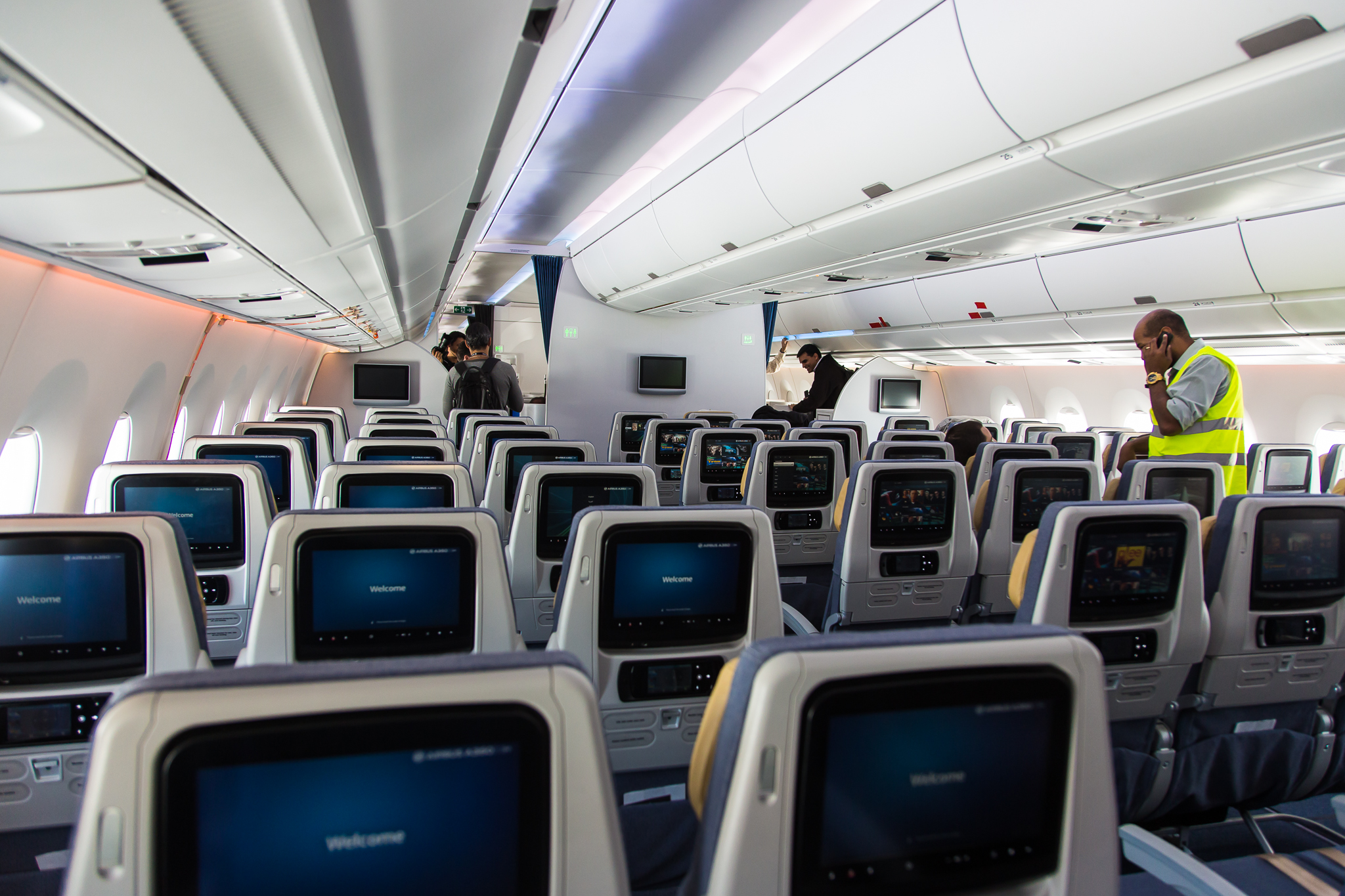
Packaging Airline Passengers for Safety
I would like to start off with a shout out to 17-year-old Raymond Wang of Vancouver for winning the top prize at the Intel International Science and Engineering Fair (ISEF), the Gordon E. Moore Award plus $75,000. Normally, I would just read the accomplishments of the youth science fair with passing interest, but this year, I fervently hope that Wang's winning entry will be adopted and implemented soon. Wang won the top prize by redesigning the airflow of passenger aircraft cabins, specifically to redirect airflow from top to bottom that will help drive airborne contaminants away from fellow passengers.
According to the June 13, 2015 Science News (SN) article "Teen wins big for pollution control at Intel ISEF"; "His adaption would send the air downward, reducing the number of germs inhaled by passengers by 98 percent, according to Wang's calculations. Also, the deflector should almost triple the amount of fresh air available to passengers."
HUZZAH!
I hope this highly practical engineering solution will soon improve my traveling experience. It has also gotten me thinking about airline travel as a packaging issue. Considering my profession, I'm surprised that I had not thought of the issue of airline passengers through my packaging lens. I am sure most of us that fly regularly (especially my big and tall friends) are very aware that seat spacing in coach has been compressed over the years which allow planes to carry more seats and thus more passengers. However, there is much more to consider when packaging passengers in an aircraft.
The first hurdle, not yet addressed or resolved, is that the seats are not sized for the passengers in neither first class nor coach; every seat space is the same regardless of the size of the passenger. In my profession, that is like asking Amazon to ship you a refrigerator or a coffee mug in a box sized for a microwave. This doesn't make sense from a packaging or logistics perspective. This single size constraint is not good for either the comfort or safety of the passengers who fall outside the fairly narrow space allotted. To drive greater space efficiency, I have recently seen an idea floated about the potential for stand-up 'seating' on some shorter haul aircraft. Unless they drastically redesign the shape of the plane from a slight oval to a much exaggerated oval, the airline will be just exchanging inadequate legroom for inadequate headroom.
Wang's design solution got me thinking about other aspects of packaging our fellow passengers. The aircraft is a classic modified atmosphere package (MAP); in this case controlling pressure and gas mix. Modified atmospheres are often employed to increase food safety (inhibit bacterial or fungal growth) and prolong shelf life (control water vapor). Depending on the product being packaged, the contents may be susceptible to various airborne constituents; oxygen is often purged, nitrogen is often flushed in. To continue the parallel and relevance of food safety, a food manufacturer would not and could not knowingly allow a contaminated product to be packaged alongside like items for fear of contaminating the entire package, but except in the case of the recent Ebola outbreak, this has been a non-issue for airlines.
With the advent of Wang's new airflow redirection and the impact on passenger cross contamination safety, I encourage all airlines to retrofit current aircraft to include Wang's air deflector. In light of some of the recent worldwide virus outbreaks (the cover story in the same issue of SN is the new threat of chikungunya virus), this invention should serve as a minimum standard for passenger safety and serve as a wake-up call to Boeing, Airbus and others to address passenger cross contamination in new and even more effective ways.
www.sciencenews.org || https://www.societyforscience.org || Twitter: @ericpkg
Subscribe to:
Posts (Atom)